 .
. .
. .
. .
.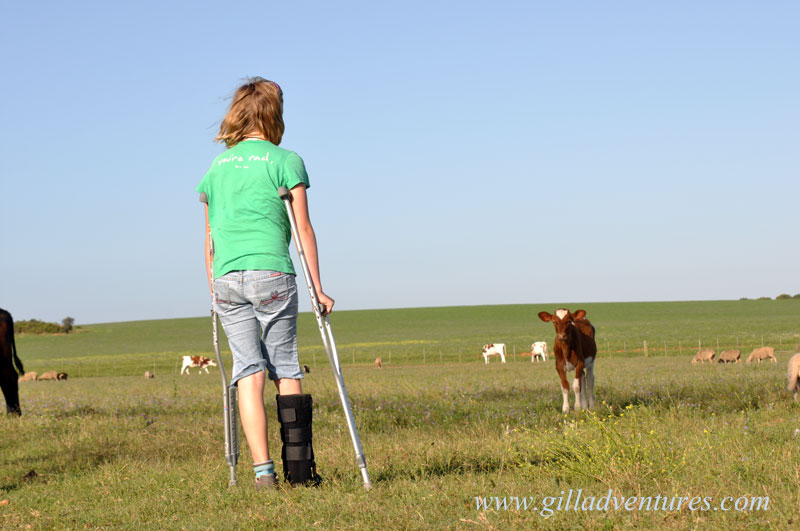
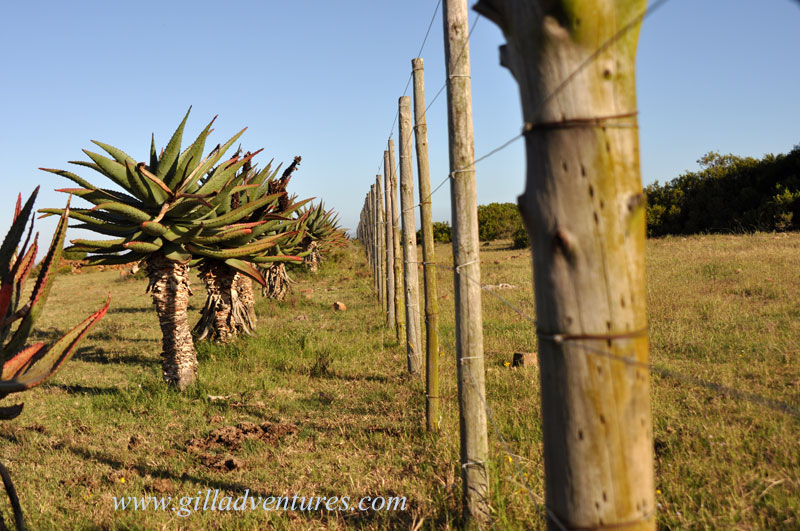
We spent a lifetime on the ranch, connecting people who live in cities to horses and the outdoors. Now, on the opposite side of the world, we’ve immersed ourselves in South African agriculture. We’ve learned that the reeds used for thatch grow only between the Breede and Gourits Rivers, and the plants take at least five years of growing before they are ready to harvest. We’ve watched the milking of cows in a dairy and tried milking one by hand. We’ve learned a bit about the husbandry of ostrich and sheep and cattle and horses. Hannah and I rode Arab horses bred and trained for endurance riding on an international level from a facility that breeds and trains horses destined for Dubai.
When planning our trip, we came across the website of a farm stay, Zoutpan, a working South African farm whose Afrikaner owners have tended for seven generations, spanning a couple of hundred years. They have diversified into several different farm products, to help insulate themselves from market fluctuations, drought, and diseases like avian flu. Their current generation of children reaching adulthood have returned to the farm with the college degrees in agriculture, something that is now almost mandatory for farmers all over the globe.
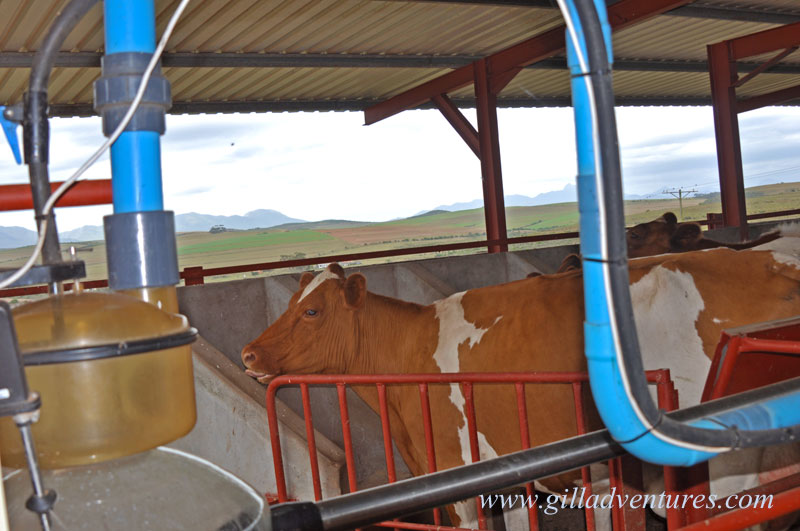
The Dairy
On Sunday morning, we sat with Bertie and Engela and talked about farming. Their son spent his internship for his bachelor’s degree on a farm in South Dakota. They seem so like the ranchers and farmers we know from back home: conservative, salt of the earth people. He told us that he was very glad the US subsidizes our farmers. Although he wished his own country would do the same, he felt the subsidies helped produce more needed food for the hungry in Africa. Otherwise American farmers would stick to the crops that would bring the top income.
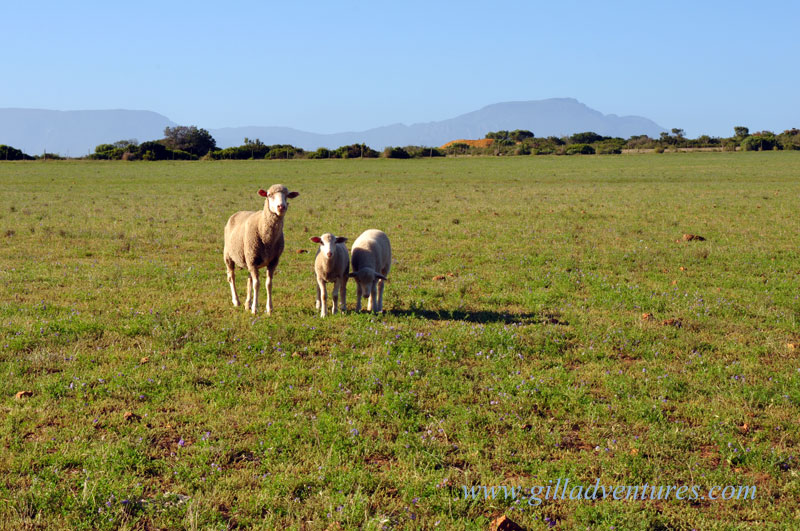
He said everyone hates the farmer, a statement that both makes me sad and worries me. All over the world, especially in Africa. People see him sell a lamb for what seems like a lot of money, with no understanding of the cost to produce it. They see him with a second bakkie, or pick-up, and think he is rich, rather than understand it is a piece of needed farm equipment.
 I think here, also, many see him as representing the colonial past. In some ways, maybe he does, but those African countries that have sent him away have paid a dear price. These farms feed the people; they represent a bread basket for the population. Take away the knowledge and wisdom of the farm and give the land to “the people” and the farm will produce less food. It may offer subsistence to the people who live on it, maybe even for the local area, but believing that a healthy food supply can come without educated farmers would be like believing a healthy education system can exist without teachers.
Countries without educated farmers who have the resources to invest in equipment and seed and livestock tend to use farming practices that ruin the land. Most can’t produce enough food on the cleared land they have, creating ripples like the slashing and burning of wildlife habitat and poaching of jungle meat. It all begins with hating the farmer.
It worries me that he feels hostility from his countrymen. Bertie told us farmers are leaving the country, looking for places that are more welcoming. Places who love the farmer and understand how important their role is in producing the food to feed the hungry.