
 .
. .
. .
. .
.
The San of the Kalahari lit their fire with the friction of sticks. On this fire, they made us a meal of nuts, squash, wildebeest, and beetles gathered and hunted from the desert.
As we’ve wandered through southern Africa the past few months, the magic of travel has given us some interesting juxtaposed experiences: Cattle and crop farmers and wildlife conservation. Citrus farms and a reserve set aside to save elephants who love oranges. The tribes of the Zulu and the San.
In KwaZulu Natal we drove through tribal lands of the fierce and strong Zulu. Home to the descendants of the warriors of Shaka Zulu. We watched, awestruck, dancers’ displays of strength and stamina, starting with kicks high over head and working up to walking on hands and lifting other dancers to the beat of drums that we could feel to our core.
As we wandered through the Drakensberg, we passed and met locals going about life. Their presence was powerful and bold. Tall, proud, dark people with broad, open faces. Direct looks that often softened to a smile when we waved or said “Hello.” We learned a little about their homesteads and history and culture through a book I picked up about the Zulu and then watching as we explored.
While staying at Giants’ Castle, we also visited the caves where the San, or bushmen, left their art. Images of animals left by a people who were literally hunted out of the area.
KwaZulu Natal was our last destination in South Africa, and the Kalahari was our first in Botswana. Well, after a few days in Gaborone spent chasing cell phone based internet. The Central Kalahari Game Reserve was originally a reservation, a place set aside for the San to live, unmolested by others. They are small and wiry people, made tough through centuries of living a hunter – gatherer life, and shy like the animals with whom they shared their landscape.
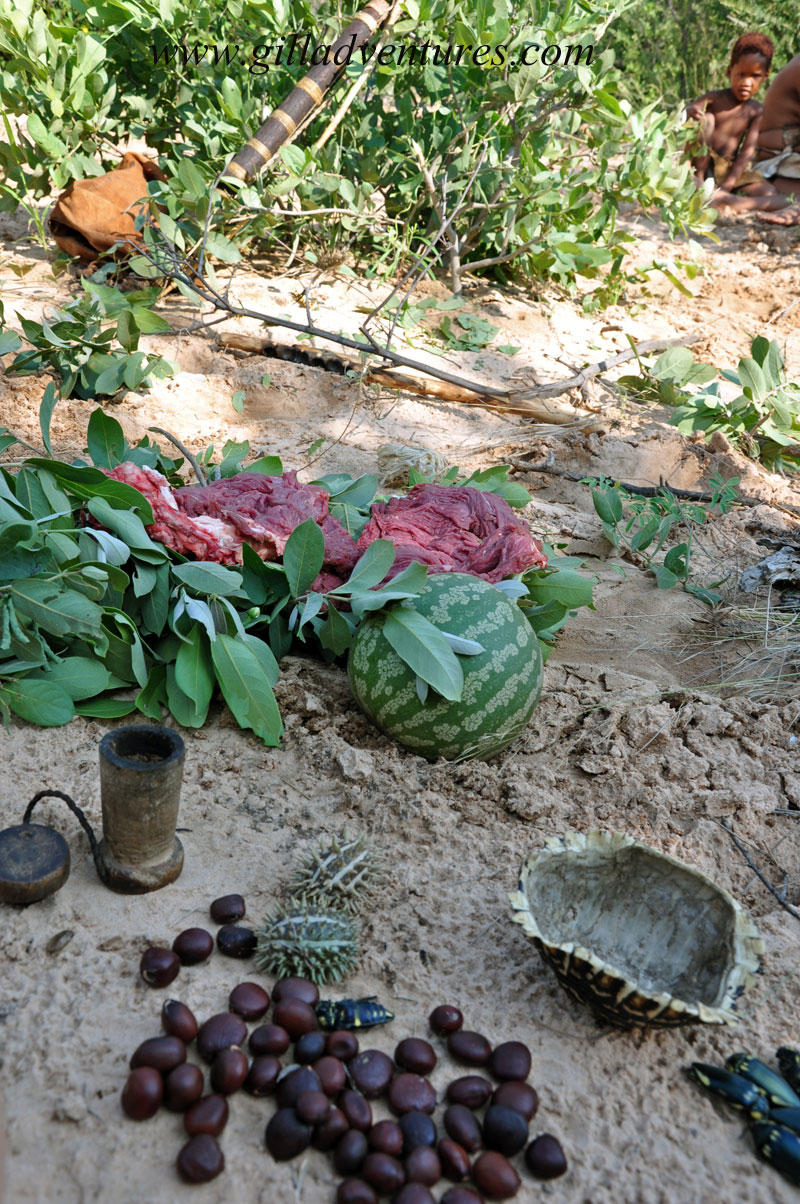
Our meal, laid out for cooking: wildebeest meat (gnu,) wild watermelon, wild cucumber, nuts, jewel beetles, and a tortoise shell bowl. The wooden thimble is for holding embers, another method of fire starting when things are too wet to create a spark rubbing ticks together.
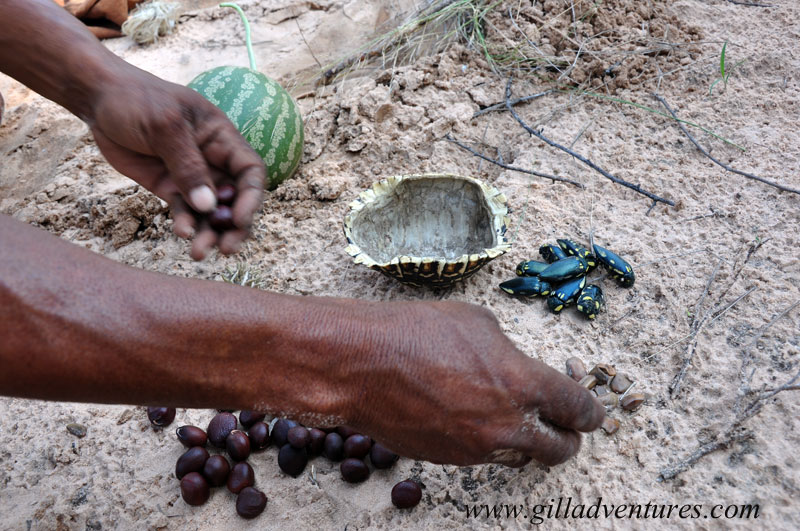
Nuts and beetles for our meal
In the evening, at the lodge, the San shared their traditional dances and games. The next day, they walked with us in the desert, digging up roots which hold water or are food, and made us a meal of nuts, jewel beetles, and wildebeest over a fire they built rubbing sticks together. Neeltjie told us how, originally, they wore western clothes for the tours, but as they realized how much the visitors enjoyed learning and understanding about their heritage, they began wearing their traditional clothes instead. Typically, they only wear them for weddings and special occasions.
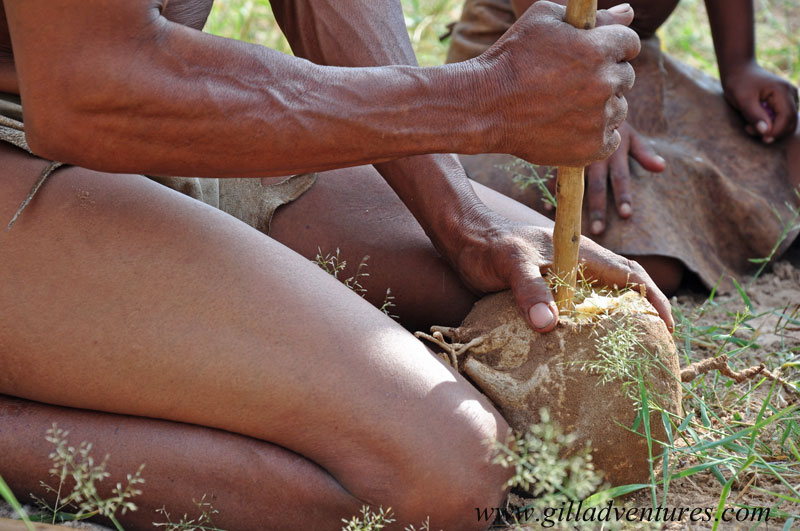
San getting water from a root that we found very similar to jicama. They smash it up a bit with a stick, then squeeze the pulp in a fist, thumb pointing down towards the mouth so the liquid will run down and provide water in the desert.
As we explore and learn about other tribes and cultures of Africa, I think sometimes about these two and the contrasts between them. I hope that our curiosity and that of other travelers will help support the bold Zulu dance troop and the quiet San. Heritage that is preserved, rather than destroyed, through tourism.



I like the philosophy of maintaining their traditions and the recognition on their part that we travelers are there to experience those cultural elements unique to them.
Amazing post and great photos. I’m trying to not feel icked out over the idea of eating beetles. It’s interesting how these Zulu individuals demonstrate aspects of their culture to visitors and the idea that it is tourism that is helping to preserve those traditions. It does make me want to learn more about how they are living in their everyday lives. You mentioned that they had grown accustomed to wearing Western clothes- to what other aspects of Western culture do they generally prescribe? Fascinating!
I know, right? The beetles became our benchmark for anything than made us squeemish. “This is no worse than…” But, at the time it seemed like the thing to do.
These are actually the San Bushmen~ the Zulu were from an area we’d visited and seen traditional dancers a couple of weeks before. (Sorry if that was confusing…) I only ever saw either tribe wearing traditional clothing during some event that was for the tourists. I did not get the chance to ask as many questions of the Zulu, although we did talk with one of the performers for a while after they finished.
The San only wear their traditional clothing for weddings and such. Around Ghanzi and the Central Kalahari Game Reserve they mostly work in the cattle industry. There was a village not far from where we were, which was completely off the grid, but we did not get over there to see how close to the traditional lifestyle they still live. (Homes, cooking facilities, etc.) They get supplies from town as local farmers pass through or family members who work for the farms come home from their cattle outposts. None of the San we met spoke English, which is a national language in Botswana, although they were beginning to understand more and more of it listening to the interpreter.
I understand in some areas closer to the Okavongo Delta, they are a bit further from their roots and more integrated.
Anyway, thanks for stopping by and commenting, Melissa!